Photo: Steve Gschmeissner / Science Source
HealthScientists Trick Cheating Cancer Cells with Re-Programmed Bacteria
Scientists have recently succeeded in destroying tumors in mice through genetically reprogrammed bacteria. The new strategy could pave the way to cancer therapies that could treat the disease more accurately, with less side effects than current available treatments.
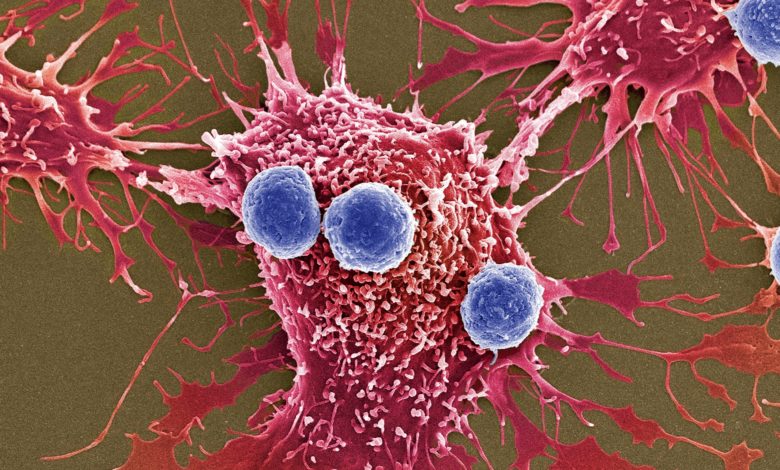
Immune cells can sometimes recognize and destroy cancer cells without assistance, but cancer cells can also camouflage themselves by switching on a gene called CD47. When immune cells pass this gene, they consider it harmless – as it normally is. This allows the masked cancer cells to grow into dangerous tumors.
Dr. Michael Dougan, an immunologist at Massachusetts General Hospital in Boston, developed a tiny antibody molecule with his colleagues called a nanobody, which they injected into bacteria programmed to commit suicide. In short, this caused the bacteria and nanobodies to expose the cancer cells, prompting the immune cells to attack.
Nicholas Arpaia, an immunologist at Columbia University in New York, and his colleagues, reported that killing off one tumor in the mice with bacteria additionally led to others shrinking. This gives the idea that the bacteria may help the immune system learn to recognize other cancer cells.
GenCirq – a company co-founded by synthetic biologist Tal Danino and of which Dr. Arpaia is on the leadership board – is exploring using the reprogrammed bacteria to create a pill that can treat some forms of cancer on humans.