Oceans
-
Environment
 Environment Belize
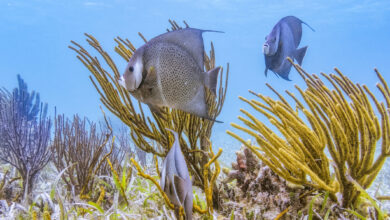
Belize Protects the Sea, Wants to Revive the Ocean’s Ecosystems
The expansion of the Sapodilla Cayes Marine Reserve is Belize’s latest effort to protect its marine resource and ocean ecosystems. The area will now cover more than 500 square miles with a strictly protected area in deep-sea of more than 350 square miles.
-
Animals
-
Environment
 Environment United Kingdom
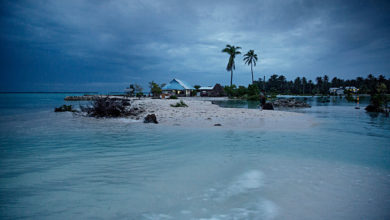
New Study: Rising Seas May Not Drown Away Small Islands, After All
Many fear that the little islands around the Pacific and the Caribbean could disappear as sea levels rise, but new research may just set those minds at ease: the islands seem to naturally find ways to keep themselves above the waters.
-
Environment
-
Heroes
 Heroes USA
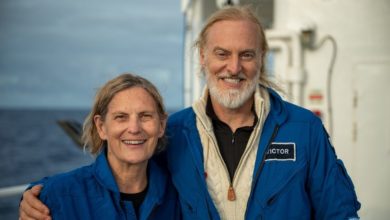
Two Records for Daring Kathy: One in Space, One on the Bottom of the Ocean
Former NASA astronaut Kathy Sullivan has become the very first woman to reach the deepest point in Earth’s oceans, the bottom of the Challenger Deep – located nearly 11,000 meters below the surface of the Pacific Ocean!
-
Animals
-
Environment
-
Environment
 Environment United Kingdom
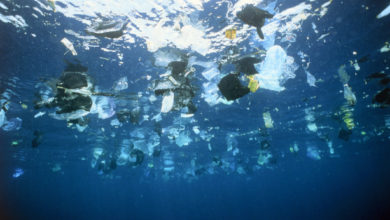
How Satellites Can Help Fight Plastic Pollution in Our Oceans
With 8 million tons of plastic estimated to enter our oceans every year, Earth observation scientists have turned to satellites and artificial intelligence to more efficiently detect plastic pollution in the waters.
-
Society
 Society USA
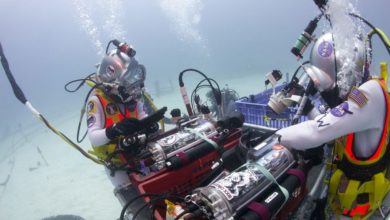
World’s Last Underwater Lab Helps Astronauts Prepare for Space
The Aquarius Reef Base in Florida, USA is the last working underwater lab on Earth helping aquanauts conduct critical environmental research. But that’s not all the challenging and remote environment is ideal for: it’s also suited to train astronauts!
-
Animals
 Animals New Caledonia
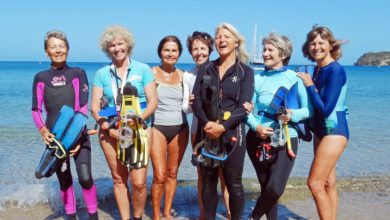
Seven Grandmas Swim with Venomous Sea Snakes – for the Sake of Science!
A group of seven “Fantastic Grandmothers” have been swimming with venomous sea snakes in New Caledonia in the Pacific Ocean. Their purpose: collecting photos and information that help researchers better understand how the sea snakes impact the ecosystem.