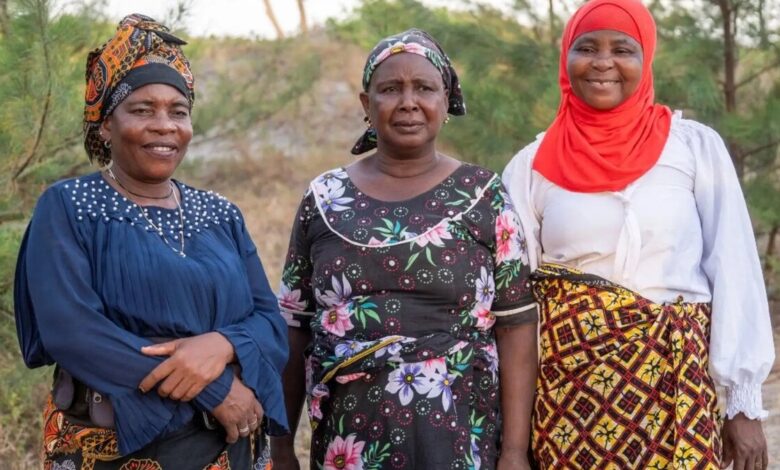
PASP beneficiaries Chamaca, Inácia, and Rosa learned casuarina planting techniques, a species that helps control advancing erosion at Zalala Beach in Quelimane, Mozambique. Photo Credit: Jossefa Francisco Jozine/World Bank
EnvironmentSociety MozambiqueSocial Program Builds Livelihoods and Climate Resilience
More than 300,000 people across Mozambique are building stronger livelihoods through a program that combines income support, practical skills, and community projects to strengthen climate resilience.
“The most important thing is that I created my machamba. I worked to overcome hunger and support the development of our children,” said Inácia Laquareta Abraão, a programme participant who invested her earnings in farmland after helping plant trees to protect the coastline from erosion.
Launched in 2012, the Productive Social Action Program (PASP) has reached all 11 provinces, with women accounting for 65% of beneficiaries. Participants earn income while working on projects including coastal protection, riverbank restoration, erosion control and rural infrastructure, while gaining skills for farming, small businesses and other livelihoods. More than 200,000 mobile money accounts have also been opened through the programme, expanding access to formal financial services. Evidence of longer-term impact is emerging among former participants: farming groups established through the programme produced around 14 tonnes of crops in one area in 2025, while other families have used acquired brick-making skills to build more resilient homes. The programme is now expanding to help more families move from short-term support to lasting employment, self-employment, and economic stability.