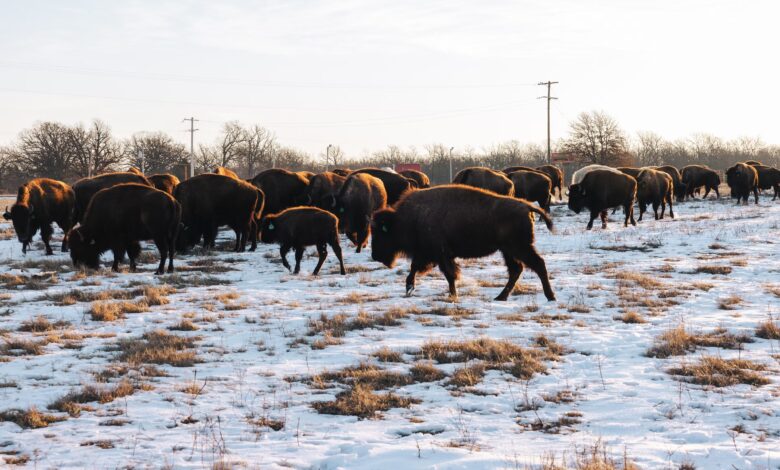
Bison seen in the Quapaw Nation in Oklahoma on 2 February 2026. After US mining contaminated the area, the native group has restored the land, making it safe and productive for crops and cattle. Photo Credit: Thalia Juarez/The Guardian
Environment USAIndigenous-Led Cleanup Transforms Toxic Land into Thriving Agriculture
In the United States, the Quapaw Nation has restored heavily contaminated land into productive farmland, turning one of the country’s worst pollution sites into a source of food and livelihoods.
“We don’t want to ever leave a site where it’s just a wasteland,” said Chris Roper, former director of construction and agriculture for the Quapaw Nation.
Decades of lead and zinc mining left around 40 square miles polluted, with toxic waste piles covering large areas and causing severe health impacts, including 34% of children showing elevated lead levels in the 1990s. Since taking over remediation in 2013, the community has restored hundreds of acres for crops such as corn, wheat, and soybeans, manages about 2,500 acres of farmland, supports herds of roughly 400 cattle, and has created nearly 100 jobs, demonstrating how locally led restoration can rebuild ecosystems, economies, and long-term food security.