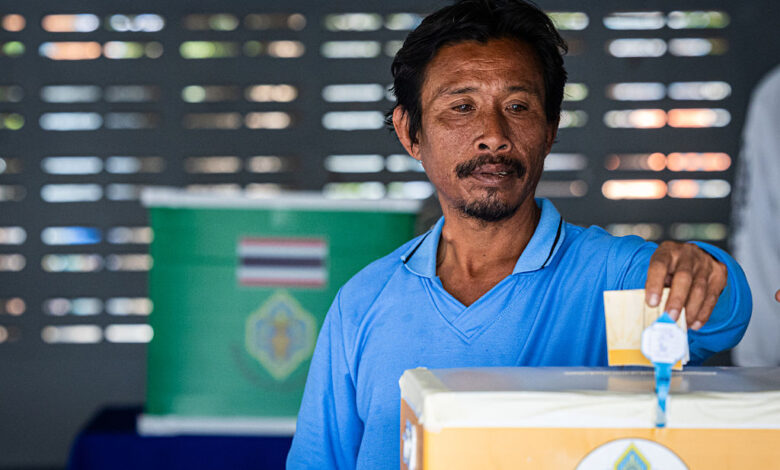
Voters cast their vote for the referendum on whether to begin drafting a new constitution on February 08, 2026 in Buriram Thailand. Thailand holds its general election as voters cast ballots for seats in the House of Representatives, with parties including the People’s Party, Pheu Thai and Bhumjaithai competing for support. Voters also took part in a referendum on whether to begin drafting a new constitution to replace the 2017 charter. Photo Credit: Lauren DeCicca/Stringer via Getty Images
Society The WorldElectoral Democracy Expands Across the World
Elections, universal voting rights and political competition have spread dramatically over two centuries, giving billions more people a voice in government worldwide.
“Politics can change for the better, sometimes beyond what people at the time could imagine,” said Bastian Herre, researcher and Project Lead at the Global Change Data Lab.
In the late 18th century, only two of 76 countries covered by the data had both elected governments and parliaments; by 2025, 165 countries did. Universal voting rights also expanded sharply, while political competition became increasingly common, with 111 of 199 countries experiencing an electoral change of government within the previous 12 years. By 2025, 117 countries met the definition of electoral democracy, compared with none before 1893. Around 4 billion people now live in electoral democracies, more than three times the 1.2 billion recorded in 1965, although recent declines demonstrate that these gains are not guaranteed.


