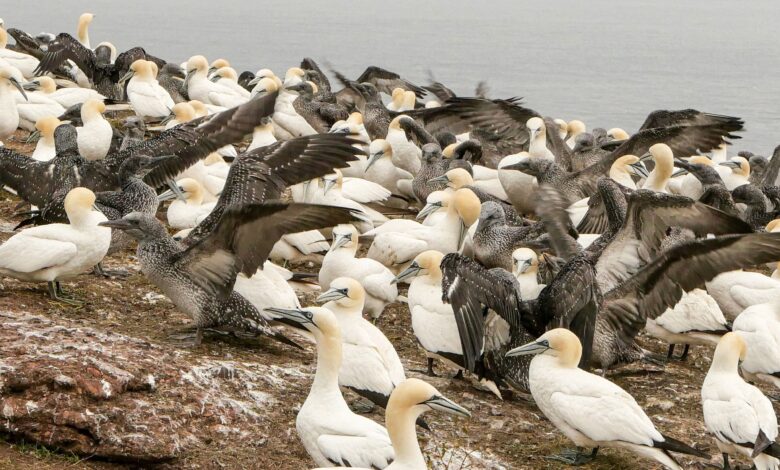
Northern gannets on Canada’s Bonaventure Island, the birds’ largest colony in North America. Photo Credit: Betend A/Andia/Universal Images Group/Getty Images
AnimalsEnvironment CanadaRegulations Drive Major Decline in Forever Chemicals
Levels of some of the most harmful PFAS “forever chemicals” in seabird eggs have fallen sharply in Canada, highlighting the long-term benefits of environmental regulations and pollution controls.
“We see this incredible rise to a peak where concentrations seem to be higher than the toxicological threshold for those birds, then it really decreases in a nice way,” said Raphael Lavoie, Ecotoxicologist at Environment and Climate Change Canada. “The regulations are having a good effect.”
Scientists analysed PFAS levels in northern gannet eggs collected over 55 years and found substantial declines following restrictions on the chemicals. Levels of PFOS, one of the most widely used and toxic PFAS compounds, fell by 74% from their peak, while PFHxS declined by about 72%. The research suggests that regulatory action in Canada, Europe and the United States, alongside international agreements and the adoption of PFAS-free alternatives in firefighting, has significantly reduced environmental contamination. While continued monitoring remains important, the findings demonstrate that coordinated policy measures can successfully reduce pollution and help protect wildlife over time.