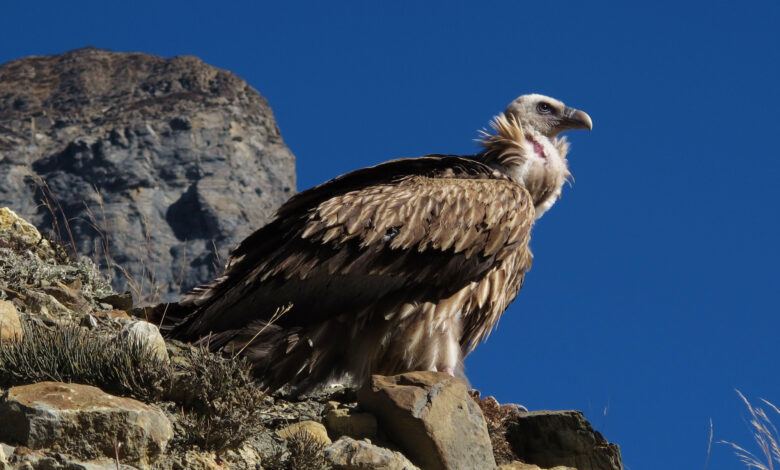
White-rumped Vulture, photographed in Manang, Nepal. Photo Credit: perreten/Getty Images
Animals NepalCritically Endangered Vultures Make Remarkable Recovery
Critically endangered White-rumped Vultures are recovering in Nepal after conservation efforts eliminated toxic veterinary drugs, demonstrating the effectiveness of sustained wildlife protection.
“Our results are testimony to the work of Bird Conservation Nepal with support from the Nepalese government to eliminate diclofenac from the veterinary market,” says John Mallord, conservation scientist at the RSPB Centre for Conservation Science.
Once among the world’s most abundant large birds of prey, the species declined by more than 90% across South Asia after feeding on carcasses of livestock treated with diclofenac. This veterinary painkiller causes fatal kidney failure in vultures. Since the drug’s veterinary ban in 2006, Nepal’s White-rumped Vulture population has increased by 12.7% annually from its 2012 low, with nationwide surveys through 2025 confirming sustained recovery. Three population models estimated annual growth rates of 8.7% to 9.8%, suggesting that improved survival and reproduction largely explain the increase. Despite producing no more than one chick per year and typically beginning to breed at four years old, the birds have demonstrated strong recovery potential. Nepal has also banned three additional harmful veterinary drugs — aceclofenac, ketoprofen and nimesulide — to safeguard two decades of conservation progress.