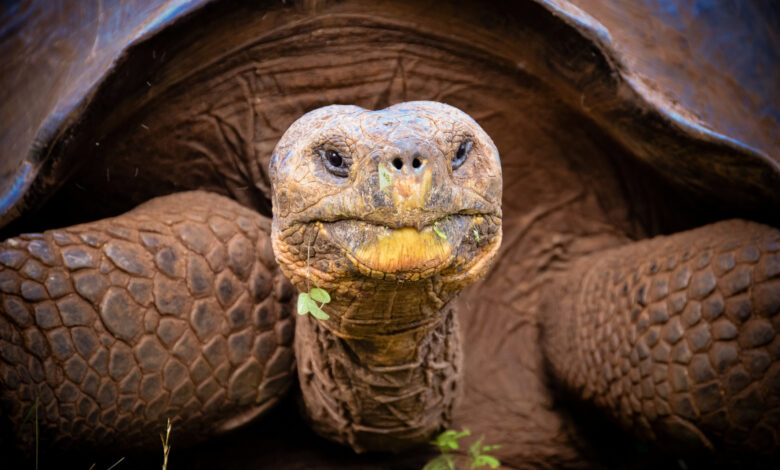
Close up of Galápagos giant tortoise in San Cristóbal, Galápagos Island. Photo Credit: Volanthevist/Getty Images
Animals EcuadorGiant Tortoises Make a Historic Return
Giant tortoises have returned to Ecuador’s Floreana Island in the Galápagos after more than 150 years, marking a major milestone in restoring the island’s biodiversity.
“They’re the architects of this ecosystem. When they start roaming again, grazing and dispersing seeds, they’ll literally reshape the island,” says Penny Becker, CEO of Island Conservation.
On 20 February 2026, conservationists released 158 captive-bred tortoises aged eight to 13, descendants carrying genetic ancestry from the island’s original tortoise subspecies, which disappeared in the mid-19th century. A breakthrough came in 2008 when scientists discovered tortoises on neighbouring Isabela Island carrying much of the extinct population’s genetic heritage. Scientists selected 23 of these animals for a breeding programme that produced more than 600 young tortoises by 2025. Satellite data helped identify suitable release sites with reliable food and water supplies for decades. As natural ecosystem engineers, giant tortoises disperse seeds, graze vegetation and help maintain healthy habitats. Their return is the first step in an ambitious restoration programme to reintroduce 12 locally extinct species to Floreana, showing how genetic research, international cooperation, and long-term conservation can help revive lost ecosystems.